I’ve heard it said that Africa “gets in your blood.” One month after arriving I now understand the meaning of this phrase...
Life here has a rhythm and a vibrancy all of its own. It’s
difficult to describe, but once you experience it for yourself you begin to realise
how values and priorities in this part of the world are very different to those in the West.
When 90% of the population are living on less than $2 a day
everyone is grappling with the same issue; working hard to simply put food on
the table. Yet despite the grinding poverty there’s a contentedness and almost
a joy about life itself. You see it in the faces and the way people live their lives. We can all learn something from
this humility to enrich our own lives...
 |
| Working hard to put food on the table. |
I bade farewell to Sam Lucas and the Onja students last Sunday. It’s always hard saying goodbye after spending three weeks so immersed in the teaching programme but I have so many great memories of my time with this inspiring social enterprise.


Being able to help the students with skills such as
confidence building, motivation and goal setting was particularly gratifying
and a reminder that young people the world over have to traverse
the same hurdles moving into adulthood; though in developing countries I believe these issues are much more pronounced because the barriers to success are
so much greater.
Last Friday was a particular highlight. My sessions with the
class over the last three weeks culminated in each student having to deliver a
3-5 minute speech in English, without notes. Bearing in mind these
students have only been learning English for just over five months this was
quite a challenge to impose on them. As you can well imagine, they were all
extremely nervous at the prospect of having to speak in front of their peers
and teachers in a language they are still learning.
Yet I knew they all desperately wanted to pass what I
described to them as the ‘ultimate confidence challenge.’ And pass it they did,
with flying colours.
It was so impressive to see the progress they had made
in just a few weeks and the confidence they exhibited. To say everyone, including the students
themselves, were blown away by their talks would almost be an understatement!
On my last day I received letters from each of them and
to read the impact this experience had on them is to realise the extent of their personal development in recent
weeks and what they have achieved.
Here are a couple of quotes from some of the letters I
particularly liked:
I had never thought I
could talk in front of such a large group of people. I was completely amazed at
myself – Manjaka
At school I was
absolutely terrified about speaking in front of people. Now I am proud of
myself that I am no longer afraid to speak in public – Fanilo
Confidence has now
become my new best friend. Thank you for making that happen for me - Prisca
To have contributed in a small way to these student’s
futures is and humbling. I know they have some big challenges
in front of them in a few years as they seek to break into the world of
professional work but I have come away inspired by their focus and dedication and
enriched by their commitment to their studies and the goals they have set for
themselves. I know each of them will do well.
But none of this would be possible without the visionary
efforts of Onja founder Sam Lucas and his team.

My time getting to know Sam
over the last few weeks and watching him in action made me realise the scale of
the challenge he has taken on and the dedication required to pull off something
like Onja.
This isn’t just a short term, overseas posting. It requires the same 24/7 dedication and commitment as any start-up business...but with all the added complications thrown in operating in a developing country; including having responsibility and guardianship for 26 talented young people most of whom are only 5-6 years his junior.
But it’s also what you give up to establish a project such
as Onja: being close to family, having a decent salary, being able to spend
time with friends and all the other trappings that we take for granted living a
comfortable life in NZ.
Very few people can do it. I know I couldn’t. I told the
students I wouldn’t have the patience!
It takes a special type of person to do what Sam has done.
I’m looking forward to writing Onja’s story as the subject of a Herald feature
on Social Entrepreneurship when I get back to NZ and spreading the word about
what he has created here. Hopefully it will inspire a few people to contribute
financially to the foundation he has established.
If you would like to do so yourself, here’s the link to his
website www.onja.org It also details more
about the project itself, including some great profiles of some of the students
undertaking the two year programme of studies in English and computer coding.
After leaving Mahanoro I spent a few days in Toamasina, home
to Madagascar’s only major port. Amazing to think virtually everything that
comes into this country of around 24 million people has to pass through this
city and most of it is then transported 7-8 hours by road to the capital Antananarivo
(single lane in each direction, no passing lanes here!) The result is almost
torturous, constantly being stuck behind large truck and
trailer units transporting shipping containers to and from the port. Dangerous overtaking manoeuvres are the norm
on a road that is riddled with potholes while young children take their lives in their hands walking to and from
school with trucks hurtling past just centimetres from
them. It’s extremely nerve wracking to watch. I can’t imagine what it must be
like for the students who have to experience it every day.
 |
| Students in rural areas walking to school each day face constant danger... |
 |
| Trucks hurtle past within centimetres of them. |
Last Sunday, I also got to experience for myself Madagascar’s
unique public transport system called the taxi-brousse. The name literally translates
to “bush-taxi.” While it’s cheap (my 7 hour journey from Mahanoro to Toamasina
cost just NZ$9!) it comes with its own set of challenges which included a
scheduled departure time of 7am that in reality turned out to be 8.30am,
seating that gives you almost zero leg room and a configuration that can
literally squash 24 passengers into a van. It would certainly give New
Zealand’s Land Transport Safety Authority nightmares.
 |
| Madagascar's infamous taxi brousse, though this is a 'luxury' version |
The taxi brousse also acts as a public bus service
constantly stopping to pick up and drop off passengers on route. While it’s chaotic
and not particularly comfortable the service provides an important life line
for those who would otherwise have no transport at all; which is basically
most the population. With gendarmes placed seemingly every 50km on
route checking for overloading and unauthorised operators, it defies belief how
it would be possible to jam any more people into what is already a travelling
sardine can!
However, living here does have its compensations. Restaurant
meals are inexpensive, generally costing around $2-3 per person; and that usually
includes drinks. Cheaper street food is also available and while
the standard can be a bit inconsistent, few NZ restaurants could match the
pricing.
 |
| Mahanaro's leading café! 25c coffee |
 |
| Haircuts are cheap too at around $1. He wanted to cut my hair but I politely declined! |
 |
| Always impressive to watch the women walking and balancing at the same time. Now that's really multitasking! |
Speaking of eating out....this week I had lunch with possibly the only other New Zealander living in Madagascar. I first met Salvis Laurenson a few years ago when I spoke to a group of business students at Aorere College and since then Salvis has kept in touch with me. Putting his university studies aside last year, he is six months into a two year mission here with the Mormon Church. I was amazed at his fluency in Malagasy after just six months and he was very useful when it came to bargaining for a few souvenirs in the local markets. (Oh, quick side note. Have you ever wondered if those Mormon missionaries you see around actually have any success converting people they meet on the streets to their faith? I was surprised to discover they do; though NZ is considered pretty tough going! When you think about it, they have to be the world’s most extensive religious conversion team in action with more than 70,000 full-time LDS missionaries serving in 421 church missions throughout the world at any one time. Missionaries are expected to converse in the local language where they are based and Salvis tells me that the Church’s language training centre in Salt Lake City, Utah, where he spent eight weeks undergoing extensive training prior to arriving in Madagascar, is one of the largest language training facilities in the world with more than 80 languages on offer. I was impressed with his dedication and commitment with only one day off each week for two years and wearing the distinctive white shirt and tie is compulsory - even on days off.)
 |
| With Salvis Laurenson. I'm sure he's the only Samoan kiwi in Madagascar! |
We had lunch at a local burger restaurant (very few and far
between in Madagascar) and I don’t think I have enjoyed my meal of sausages
and eggs with baked beans and bacon so much after almost a month
of only eating rice and beans. So a bit of meat was extremely welcome. I was also very surprised to find the
restaurant adorned with rugby jerseys from around the world only to discover
All Black rugby jerseys here are particularly sought after. It seems the former
French association is responsible for rugby being followed here with a great
deal of interest, particularly if the ABs are playing France; though the locals
are the first to admit they’re all too small to play the game themselves!
Football is very much the sport of choice...
 |
| Very surprised to find an All Black jersey in a bar in Madagascar |
 |
| Don't think this woman really understood why we made such a fuss of her or the significance of the t-shirt she was wearing! Seems she purchased it in a local second hand clothing stall and had absolutely no idea where NZ was... |
If there’s one thing you associate with Madagascar its lemurs. Earlier this week I got to meet a few of them in person...
 |
| These guys are always hungry. Lemurs eat around 5-8% of their bodyweight every day. |

This is a huge issue in Madagascar. Stoves are extremely rare here. Just about everyone in the rural areas, where the majority of the population live, uses open fires for cooking. Just consider how much firewood is required every day to feed around 20 million people and you quickly understand why Madagascar’s forests are disappearing at an alarming rate. This of course leads to serious erosion issues and a vicious cycle of land degradation is very apparent when you travel around the country.
 |
| A common sight in the rural areas. Huge piles of firewood for sale |
 |
| And this is what deforestation looks like... |
The current situation is unsustainable yet there seems to be little in the way of alternative cooking options being considered. I'm aware that in other parts of Africa attempts have been made to switch people to using kerosene stoves; yet they also come with their own set of safety hazards.
However, it’s obvious that a commitment to environmental issues
is a low priority in a country when poverty is so prevalent, yet it’s an issue
that is already causing serious damage and will continue to do so in the
future.
Madagascar is a fascinating country with so much to offer
visitors. Vast areas of the country are virtually uninhabited and unexplored.
But this is a country where nothing comes easy and the thrill of an adventure off
the beaten track is still apparent. It’s what makes Madagascar special but also
what holds it back. If it could fix it’s roads and upgrade some of its tourism
infrastructure it would go a long away to improving its attractiveness for
visitors while creating obvious economic benefits and employment opportunities
for the country as a whole. With world class beaches, an eco-tourism product
that is truly unique and a culture that is welcoming and friendly, there is no
reason why Madagascar should be so poor. Time will tell if the country’s new
political leadership can improve its prospects for the future; though corruption also remains a huge problem.
I know these are issues uppermost in the minds of the students I
met at Onja. If they are not addressed they are likely to vote with their feet and take their valuable, hard earned skills
offshore. That would be a real pity.
 |
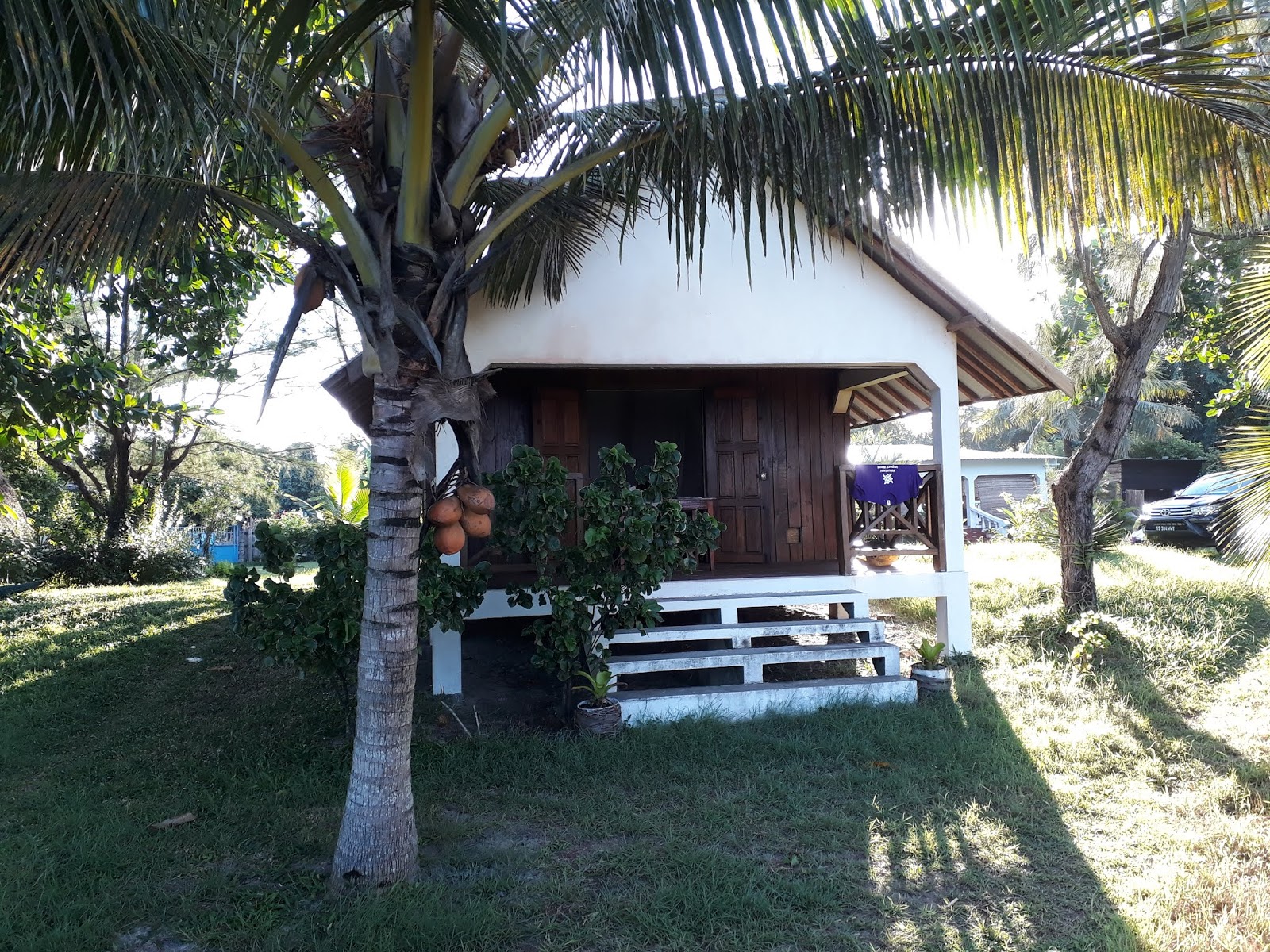
| Farewell Madagascar. I'll certainly miss those beautiful early morning sunrises from my deck! |